What Defines Roller Luggage Through Two-Wheel Pulling, Protected Axles, and Rough-Terrain Mobility?
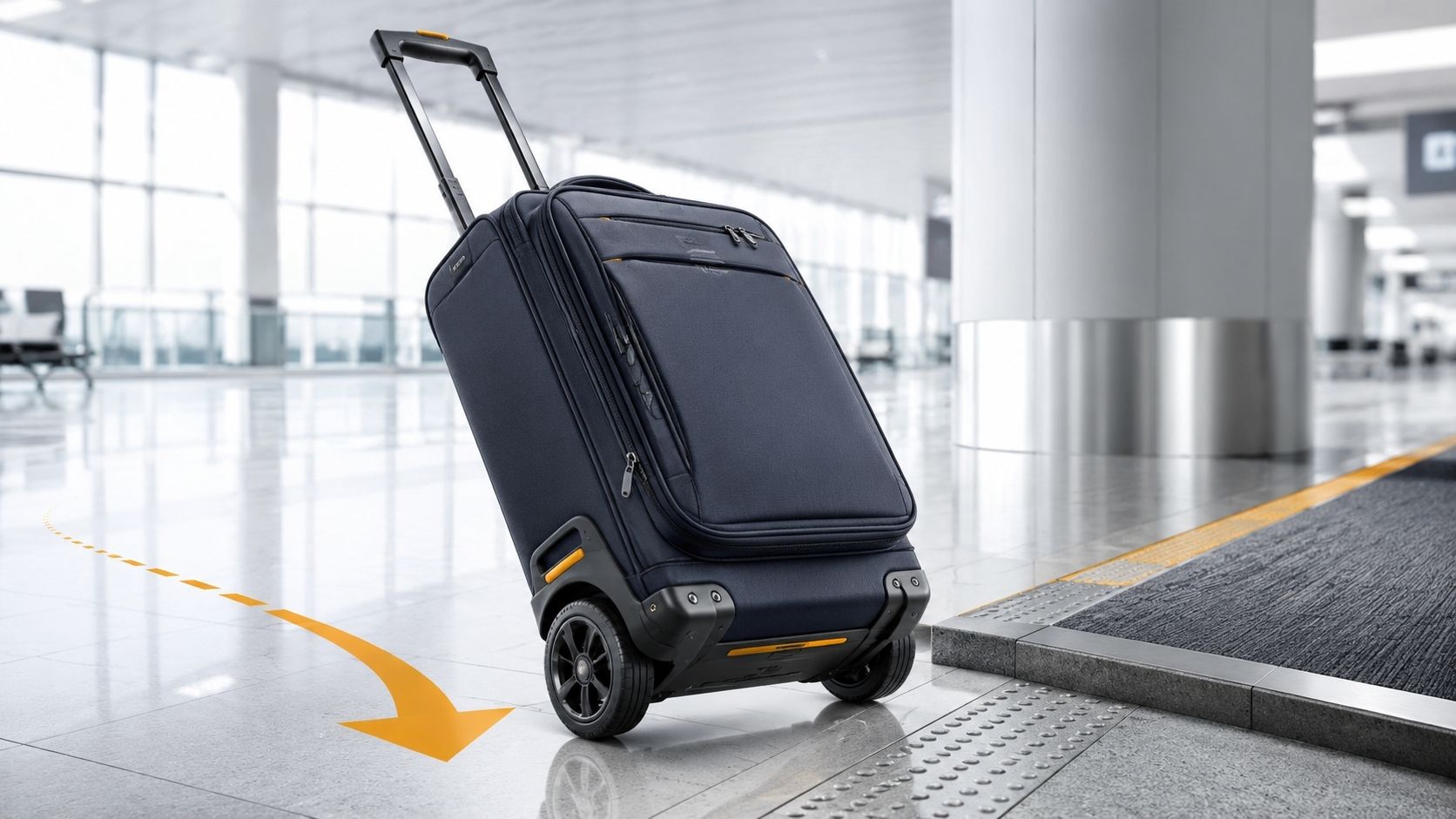
Roller luggage is defined by two-wheel pulling, protected wheel placement, straight tracking, and better control across rougher travel surfaces than many exposed spinner-wheel bags. It usually moves behind the traveler at a tilted pulling angle, with fixed wheels and a base structure designed for directional stability.
This article explains roller luggage mechanics, feature selection, packing and pulling rules, scenario matching, safe wheel or frame troubleshooting, and the final checklist to complete before a trip.
Why does roller luggage matter for rough-terrain travel?
Roller luggage matters for rough-terrain travel because two larger fixed wheels can track more predictably over uneven surfaces than many small exposed spinner casters. Cobblestones, curbs, gravel, thick carpet, and uneven sidewalks can make small swivel wheels drag or catch.
The mobility advantage is that roller luggage usually tracks behind the traveler in one direction, with wheels often recessed into the frame. protected wheels reduce exposure to side impacts when the bag meets curbs, platforms, or baggage systems.
The boundary is that roller luggage still requires pulling effort and can strain the arm or shoulder if packed poorly or pulled for long distances. rough terrain performance is strongest when fixed wheels, protected housings, and controlled pulling match the surface.
How does roller luggage use two-wheel pulling and protected axles?
Roller luggage uses two-wheel pulling and protected axles by placing fixed wheels near the rear base so the bag tracks behind the traveler at a tilted pulling angle. two wheels help the bag track behind the traveler instead of swiveling sideways.
The handle controls pulling angle and direction, while the frame, skid plate, corner guards, and base reinforcement help support the load. tilted pulling works best when the handle height and bag weight allow a natural pulling angle.
In travel terms, this design can help on sidewalks, train stations, rough pavements, and trips outside smooth terminals. It is not ideal for every terrain, so curbs, stairs, platform gaps, and sharp edges should still be lifted rather than dragged over aggressively.
| Component | What It Does | What to Check |
|---|---|---|
| Fixed wheels | Track in one direction | Smooth roll, no wobble |
| Recessed housing | Protects wheel edges | Cracks or looseness |
| Telescoping handle | Controls pulling angle | Stable lock positions |
| Skid plate | Protects lower base | Scrapes or loose parts |
| Frame/base | Supports load | Warping or sagging |
Which roller luggage features improve durability and control?
Roller luggage features improve durability and control when wheel size, recessed housing, handle stability, skid protection, and repairability match the traveler’s route and load. wheel protection depends on recessed housings, stable axles, strong mounts, and careful lifting over hard edges.
When do larger roller luggage wheels help?
Larger roller luggage wheels help when the route includes sidewalks, station platforms, carpet edges, or rougher indoor-outdoor transitions. The trade-off is that larger wheels may add bulk or affect the exterior profile of the bag.
When do recessed wheel housings help roller luggage?
Recessed wheel housings help roller luggage when wheel protection matters more than maximum interior space. Depending on the design, recessed housings may reduce a small amount of interior space or change how the base is packed.
When does handle stability matter in roller luggage?
Handle stability matters in roller luggage because the telescoping handle controls pulling angle, steering direction, and bag balance. Stronger or more stable handles can improve control, but they may add weight or complexity.
When does wheel replaceability matter in roller luggage?
Wheel replaceability matters in roller luggage when frequent travelers want to extend bag life after tread wear, axle damage, or wheel housing stress. Compatibility varies by brand and model, so replacement should follow manufacturer guidance.
| Feature | Helps With | Watch Out For |
|---|---|---|
| Larger wheels | Rougher surfaces | Added bulk |
| Recessed housing | Wheel protection | Interior space trade-off |
| Stable handle | Pulling control | Added weight |
| Skid plates | Base protection | Wear over time |
| Replaceable wheels | Longer bag life | Brand compatibility |
How should roller luggage be packed and pulled to reduce strain?
Roller luggage should be packed and pulled to reduce strain by keeping dense items near the wheel base, balancing weight left to right, setting a natural handle height, lifting over hard edges, and stabilizing secondary bags. pulling force depends on packed weight, handle angle, surface condition, and how the bag is balanced.
Dense items should sit near the wheel base so the bag does not feel top-heavy when tilted. Left-right balance matters because uneven packing can make a two-wheel suitcase twist, lean, or pull awkwardly.
Set the telescoping handle at a height that allows a natural arm position, then lift the bag over curbs, steps, platform gaps, and sharp edges. Avoid stacking unstable bags on the handle unless a trolley sleeve or strap keeps the load secure and balanced.
| Rule | Purpose |
|---|---|
| Heavy items near wheels | Better balance |
| Weight even left-right | Less twisting |
| Handle at natural height | Better control |
| Lift over curbs | Protects wheels |
| Secure stacked bags | Prevents tipping |
Which roller luggage style works best for each travel scenario?
Roller luggage style works best when the bag format matches the route surface, packing load, transport mode, and expected handling exposure. surfaces such as sidewalks, station platforms, carpets, and rough pavements change how the bag should be pulled or lifted.
What roller luggage works best for city and train travel?
Two-wheel roller suitcases or wheeled backpacks often work best for city and train travel because fixed wheels handle sidewalks, curbs, platforms, and station movement better than many spinner wheels. Pulling for long distances can still strain the arm if the bag is too heavy.
What roller luggage works best for business travel?
Structured two-wheel carry-ons or compact roll-aboards often work best for business travel because they offer straight tracking, organized packing, and better overhead-bin control. Hard or structured cases may have less flexibility for last-minute extras.
What roller luggage works best for road trips or outdoor gear?
Rolling duffels or rugged fabric rollers often work best for road trips or outdoor gear because flexible bodies fit car trunks, gear loads, and uneven travel environments. Soft bodies need careful packing to prevent contents from shifting.
What roller luggage works best for checked travel?
Reinforced roller luggage with protected wheels, strong handles, and durable shell or fabric often works best for checked travel because checked bags face more handling, stacking, and conveyor movement. Wheels, handles, and zippers may fail before the main shell or fabric.
| Scenario | Best Roller Luggage Style | Main Risk |
|---|---|---|
| City/train travel | Two-wheel suitcase | Arm strain if overloaded |
| Business travel | Structured roll-aboard | Less flexible packing |
| Road trip | Rolling duffel | Shifting contents |
| Checked travel | Reinforced roller | Component damage |
| Outdoor/mixed travel | Wheeled backpack | Extra carry weight |
How can roller luggage wheel and frame problems be fixed safely?
Roller luggage wheel and frame problems should be fixed safely by stopping forced use, removing visible debris, inspecting wheel housings and handle tracks, and checking manufacturer guidance before repairs.
How should jammed roller luggage wheels be handled?
Jammed roller luggage wheels should be handled by gently removing visible hair, thread, lint, grit, or dirt before forcing the bag to roll. Escalate to manufacturer guidance or a luggage repair service if the wheel stays locked.
How should dragging roller luggage wheels be handled?
Dragging roller luggage wheels should be handled by stopping the pull and inspecting the wheel before continuing. Replace the wheel only if compatible parts and brand guidance are available.
How should a wobbly roller luggage handle be handled?
A wobbly roller luggage handle should be handled by cleaning the handle tracks and testing all locking positions before forcing the handle. Seek repair if rails or lock pins are damaged.
How should bent or stressed roller luggage frames be handled?
Bent or stressed roller luggage frames should be handled by emptying the bag and checking whether damage affects rolling, standing, or closure. Avoid DIY frame bending on structural damage; use warranty support or professional repair.
| Problem | Likely Cause | Safer First Step |
|---|---|---|
| Wheel jam | Hair, grit, thread | Remove visible debris |
| Dragging roll | Worn tread or debris | Stop and inspect |
| Wobbly handle | Loose rail or lock | Test handle positions |
| Leaning bag | Poor packing or frame stress | Rebalance and inspect |
| Damaged housing | Impact or rough pulling | Use repair support |
Which roller luggage checklist should you complete before a trip?
A roller luggage checklist should confirm wheel movement, wheel housing condition, handle locks, exterior size, packing balance, edge-lifting habits, tag removal, and manufacturer repair guidance before a trip.
This checklist does not guarantee durability, fatigue prevention, or cargo-hold survival. It helps reduce avoidable dragging, wobble, imbalance, handle stress, wheel damage, and risky repair decisions before travel.
- Roll the bag on a flat surface to check for dragging, wobbling, or vibration.
- Inspect both wheels for cracks, flat spots, looseness, or trapped debris.
- Confirm wheel housings are not cracked, bent, or loose.
- Extend and lock the telescoping handle at each height setting.
- Check top and side handles for looseness or tearing.
- Measure the full exterior bag if airline size compliance matters.
- Pack dense items near the wheel base.
- Balance left and right weight to prevent twisting.
- Avoid overloading the telescoping handle with unstable secondary bags.
- Lift the bag over curbs, stairs, platform gaps, and sharp edges.
- Remove old airline tags before checking the bag.
- Check warranty or manufacturer guidance before replacing wheels or repairing frame damage.
What should you remember about roller luggage?
Roller luggage works best when two-wheel tracking, protected wheels, handle stability, balanced packing, and rough-surface control all match the travel route. It can handle rougher routes better than many spinner bags, but it is not ideal for every terrain and still requires pulling effort.
The safest approach is to match the bag to your route, pack dense items near the wheel base, balance left and right weight, lift over hard edges, and check wheels, housings, handles, and frame condition before travel.
Frequently Asked Questions About Roller Luggage
What is roller luggage?
Roller luggage is luggage with two fixed wheels, usually pulled behind the traveler at a tilt. It is designed for straighter tracking and often handles rougher surfaces better than many four-wheel spinner bags.
Is roller luggage better than spinner luggage?
Roller luggage is better on sidewalks, cobblestones, curbs, carpet edges, and rougher transit routes. Spinner luggage is usually better on smooth airport floors and hotel surfaces. The better choice depends on your route.
Why does roller luggage have only two wheels?
Roller luggage uses two fixed wheels so the bag tracks behind the traveler instead of swiveling sideways. This can improve control on uneven surfaces and reduce wheel exposure when the wheels are recessed.
How should roller luggage be pulled?
Roller luggage should be pulled at a natural handle height with dense items packed near the wheel base and weight balanced left to right. Lift it over curbs, stairs, and platform gaps instead of dragging the wheels over hard edges.
Can roller luggage wheels be replaced?
Some roller luggage wheels can be replaced, but compatibility depends on the brand, model, wheel housing, axle design, and manufacturer parts. Check warranty and repair guidance before replacing wheels.