Which Traits Define Spinner Luggage Through Four-Wheel Mobility, Upright Rolling, and Airport Maneuverability?
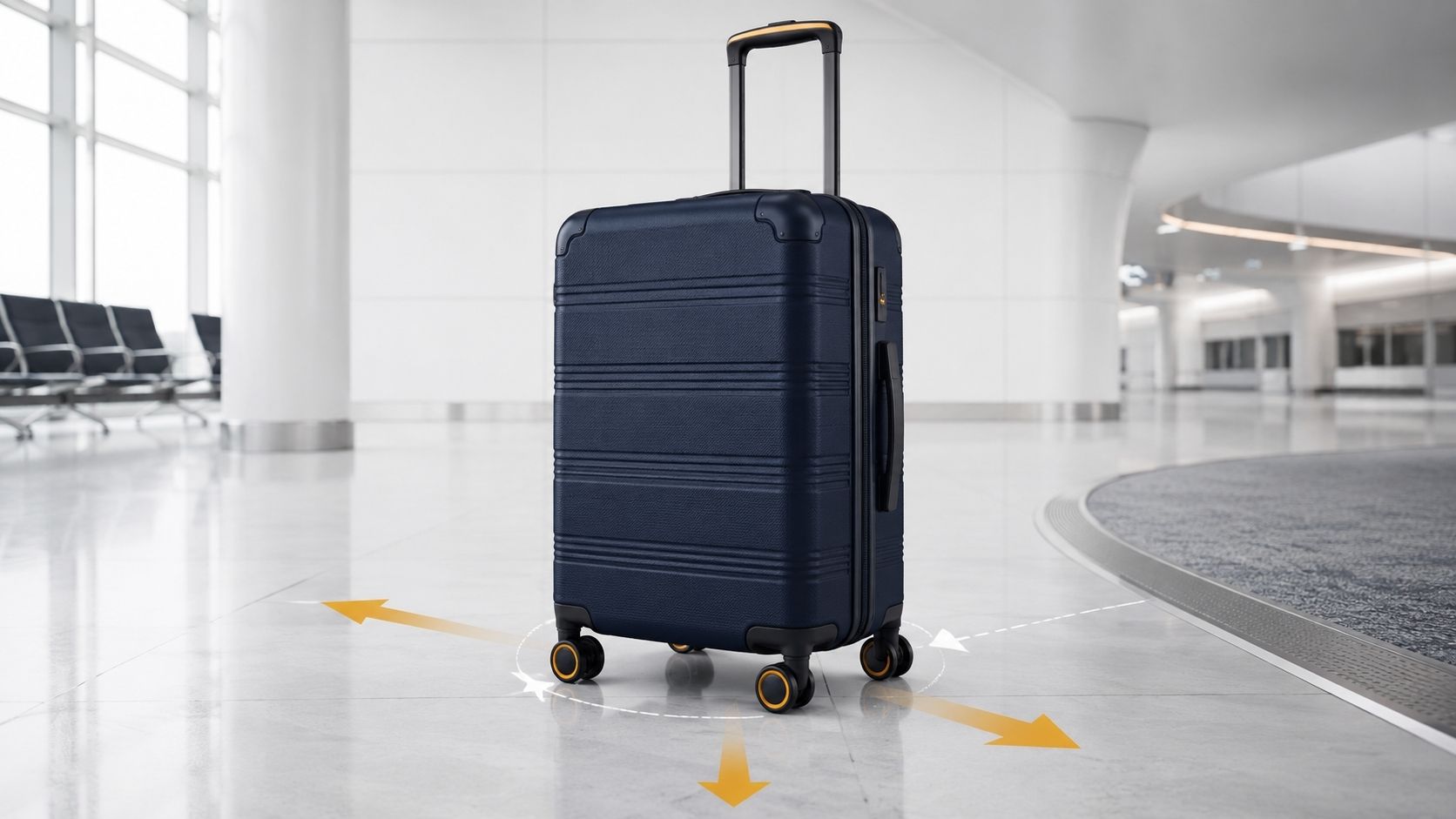
Spinner luggage is defined by four-wheel swivel mobility, upright rolling, and easier maneuvering on smooth airport, hotel, and terminal surfaces. Its four caster-style wheels allow forward, sideways, diagonal, and beside-the-body movement when the bag is controlled on flat travel routes.
This article explains spinner luggage wheel design, 360-degree pivot movement, durability features, terrain handling, wheel problem prevention, and the final mobility checklist to complete before departure.
Why does spinner luggage matter for easier movement through airports and terminals?
Spinner luggage matters for easier movement through airports and terminals because four-wheel upright rolling lets travelers guide the bag beside them on smooth floors. Traditional two-wheel luggage usually needs to be tilted and pulled behind the body, while spinner luggage can stay upright when the route is flat and controlled.
The mobility benefit is that spinner luggage can move forward, sideways, and diagonally in queues, aisles, hotel lobbies, and boarding areas. four wheels support upright rolling when the surface is flat and the load is controlled.
The boundary is that spinner luggage still requires steering effort when it is heavy, overloaded, or used on rough surfaces. upright movement helps travelers guide the bag beside them instead of pulling it behind the body, but it does not remove all effort.
How does spinner luggage use four-wheel swivel movement to change direction?
Spinner luggage uses four-wheel swivel movement by placing caster-style wheels at the base corners so the bag can change direction without being fully tilted. The wheel system uses corner-mounted caster wheels to support upright movement on smooth surfaces.
The swivel function lets the bag pivot and change direction, while the rolling function carries the load across flat surfaces. 360-degree pivots allow the bag to change direction without being fully tilted behind the traveler.
The telescoping handle still matters because it controls steering direction and bag alignment. Spinner luggage works best on smooth airport floors, hotel lobbies, cruise terminals, and flat indoor spaces, but gaps, curbs, thick carpet, gravel, cobblestones, and uneven pavement can strain small caster wheels.
| Wheel Design | Best Strength | Main Trade-Off | Best For |
|---|---|---|---|
| Single spinner wheel | Simple and common | Less stable under heavy load | Light travel |
| Dual spinner wheel | Better weight spread | More parts to maintain | Frequent airport use |
| Recessed wheel housing | Better impact protection | May reduce packing space | Checked or rougher handling |
| Exposed wheel housing | Smooth glide, common design | More vulnerable to hits | Carry-on airport travel |
Which spinner luggage wheel features improve durability and control?
Spinner luggage wheel features improve durability and control when wheel design, housing protection, tread quality, handle stability, and replaceable parts match the traveler’s route and bag weight. wheel vulnerability increases when exposed casters hit curbs, gaps, gravel, or rough pavement.
When do dual wheels improve spinner luggage?
Dual wheels improve spinner luggage when the bag needs better load spread, turning stability, and control through long terminal routes. The trade-off is that more wheel parts can collect more hair, dust, lint, and debris.
When do recessed wheel housings improve spinner luggage?
Recessed wheel housings improve spinner luggage when wheel protection matters more than maximum packing space or lowest weight. This can matter for checked luggage, curbs, impacts, and rougher airport routes, but recessed housings may slightly reduce packing space or add weight.
When does wheel tread material matter in spinner luggage?
Wheel tread material matters in spinner luggage because softer or better-designed tread can feel smoother and quieter on hard indoor floors. Performance still depends on wheel design, bag load, surface type, tread quality, and long-term wear.
When does handle stability matter in spinner luggage?
Handle stability matters in spinner luggage because the telescoping handle controls steering direction and bag alignment. A loose, flexing, or wobbly handle can make the bag harder to guide, especially when the bag is heavy or moving across carpet transitions.
| Feature | Helps With | Watch Out For |
|---|---|---|
| Dual wheels | Stability and turning | More debris buildup |
| Recessed housings | Wheel protection | Slight space trade-off |
| Softer tread | Quiet, smoother roll | Wear varies by surface |
| Strong handle lock | Better steering | Adds build complexity |
| Replaceable wheels | Longer usable life | Compatibility varies |
How should spinner luggage be maneuvered across airports, carpets, curbs, and rough ground?
Spinner luggage should be maneuvered upright on smooth surfaces and protected on rough surfaces by slowing down, tilting briefly, lifting over edges, or carrying when terrain becomes too harsh. best surfaces are smooth airport floors, hotels, terminals, and flat indoor routes.
Use upright four-wheel glide on airport tile and other smooth floors. On hotel carpet, slow down and push forward; on thick carpet edges, tilt briefly or lift so the small caster wheels do not catch.
Curbs, steps, platform gaps, cobblestones, gravel, and rough pavement should not be treated as normal spinner routes. rough terrain limits matter because small swivel wheels can strain on cobblestones, gravel, curbs, and thick carpet.
On slopes, keep the bag in hand, lay it flat, or secure it against a stable barrier. Spinner luggage can roll away because all four wheels can move freely unless the model has brakes and the brakes are working.
| Surface | Best Handling Method | Main Risk |
|---|---|---|
| Airport tile | Upright four-wheel glide | Low control risk |
| Hotel carpet | Slow forward push | Higher drag |
| Thick carpet edge | Short tilt or lift | Wheel strain |
| Curbs/steps | Manual lift | Wheel impact |
| Cobblestones/gravel | Tilt, pull, or carry | Caster stress |
| Slopes | Hold or secure bag | Runaway rolling |
How can spinner luggage wheel problems be fixed or prevented?
Spinner luggage wheel problems can be fixed or prevented by removing visible debris, cleaning wheels gently, checking housings, avoiding forced rolling, and following manufacturer guidance before repairs.
How should jammed spinner luggage wheels be handled?
Jammed spinner luggage wheels should be handled by gently removing visible hair, thread, lint, or dirt before forcing the wheel to roll. Escalate to manufacturer guidance or a luggage repair service if the wheel remains locked.
How should squeaky spinner luggage wheels be handled?
Squeaky spinner luggage wheels should be handled by cleaning and drying the wheel and housing before using any lubricant. Use lubricant only if the manufacturer recommends it for that wheel type.
How should wobbling spinner luggage wheels be handled?
Wobbling spinner luggage wheels should be handled by inspecting the wheel housing, screws, mount, and tread before using the bag heavily. Do not keep using the bag heavily if the wheel mount is cracked or unstable.
How should runaway spinner luggage be prevented on slopes?
Runaway spinner luggage should be prevented on slopes by keeping the bag in hand, laying it flat, or positioning it against a stable barrier. If the bag has wheel brakes, test them before relying on them.
| Problem | Likely Cause | Safer First Step |
|---|---|---|
| Wheel jam | Hair, thread, debris | Remove visible debris gently |
| Wheel squeak | Dirt or dryness | Clean and dry the wheel |
| Wobble | Loose or worn mount | Inspect wheel housing |
| Dragging wheel | Damaged tread or axle | Stop forcing the roll |
| Runaway bag | Slope + free wheels | Lay flat or secure |
Which spinner luggage checks should you complete before departure?
A spinner luggage mobility check should confirm wheel spin, caster swivel, debris removal, rolling alignment, wheel housing condition, handle lock strength, steering control, and terrain readiness before departure.
This checklist does not guarantee zero effort, all-surface performance, or wheel durability. It helps reduce avoidable wheel jams, wobble, drag, steering problems, and rough-terrain damage before the trip starts.
- Spin each wheel by hand to check for sticking, grinding, or wobbling.
- Swivel each caster to confirm it turns freely.
- Remove visible lint, hair, thread, or dirt from wheel hubs.
- Roll the bag on a flat surface to check for pulling, dragging, or vibration.
- Check wheel housings for cracks, looseness, or missing screws.
- Extend and lock the telescoping handle at each height setting.
- Push the bag beside your body to test steering control.
- Tilt the bag briefly to confirm it can handle carpet edges or rough patches if needed.
- Test wheel brakes if the luggage includes them.
- Avoid overpacking if the bag becomes hard to steer or unstable.
- Plan to lift the bag over curbs, stairs, platform gaps, and rough ground.
- Choose spinner luggage mainly for smooth airport, hotel, and terminal movement.
What should you remember about spinner luggage?
Spinner luggage works best when four-wheel mobility, upright rolling, handle stability, wheel protection, terrain choice, and bag weight all support the same smooth-surface travel route. It can make airport and terminal movement easier, but it does not remove all effort or work equally well on every surface.
The safest approach is to choose spinner luggage for smooth airport, hotel, cruise-terminal, and flat indoor movement while protecting the wheels on curbs, stairs, gravel, cobblestones, carpet edges, platform gaps, and slopes. Wheel design, housing protection, tread quality, handle stability, load, terrain, and pre-trip checks all shape performance.
Frequently Asked Questions About Spinner Luggage
What is spinner luggage?
Spinner luggage is luggage with four caster-style wheels that allow upright rolling and multidirectional movement on smooth surfaces. It can be pushed, pulled, guided beside the body, or moved sideways in airports and terminals.
Is spinner luggage better than two-wheel luggage?
Spinner luggage is better on smooth airport floors, hotels, cruise terminals, and flat indoor spaces. Two-wheel luggage can be better on rougher streets, curbs, cobblestones, and uneven routes because it usually has larger or more protected wheels.
Does spinner luggage work on carpet?
Spinner luggage can work on low hotel carpet, but it may drag on thicker carpet or carpet edges. When the wheels resist, tilt the bag briefly, slow down, or lift it over the transition.
Why do spinner luggage wheels break?
Spinner luggage wheels can fail from impact, debris buildup, worn tread, loose screws, cracked housings, overloaded bags, or dragging over rough surfaces. Wheel durability depends on wheel design, housing protection, load, and terrain.
Can spinner luggage roll away?
Spinner luggage can roll away on slopes, ramps, buses, trains, or platforms because all four wheels are free to move. Keep the bag in hand, lay it flat, place it against a stable barrier, or test wheel brakes if the model includes them.