When Is Carry-On Luggage Best for Short Trips?
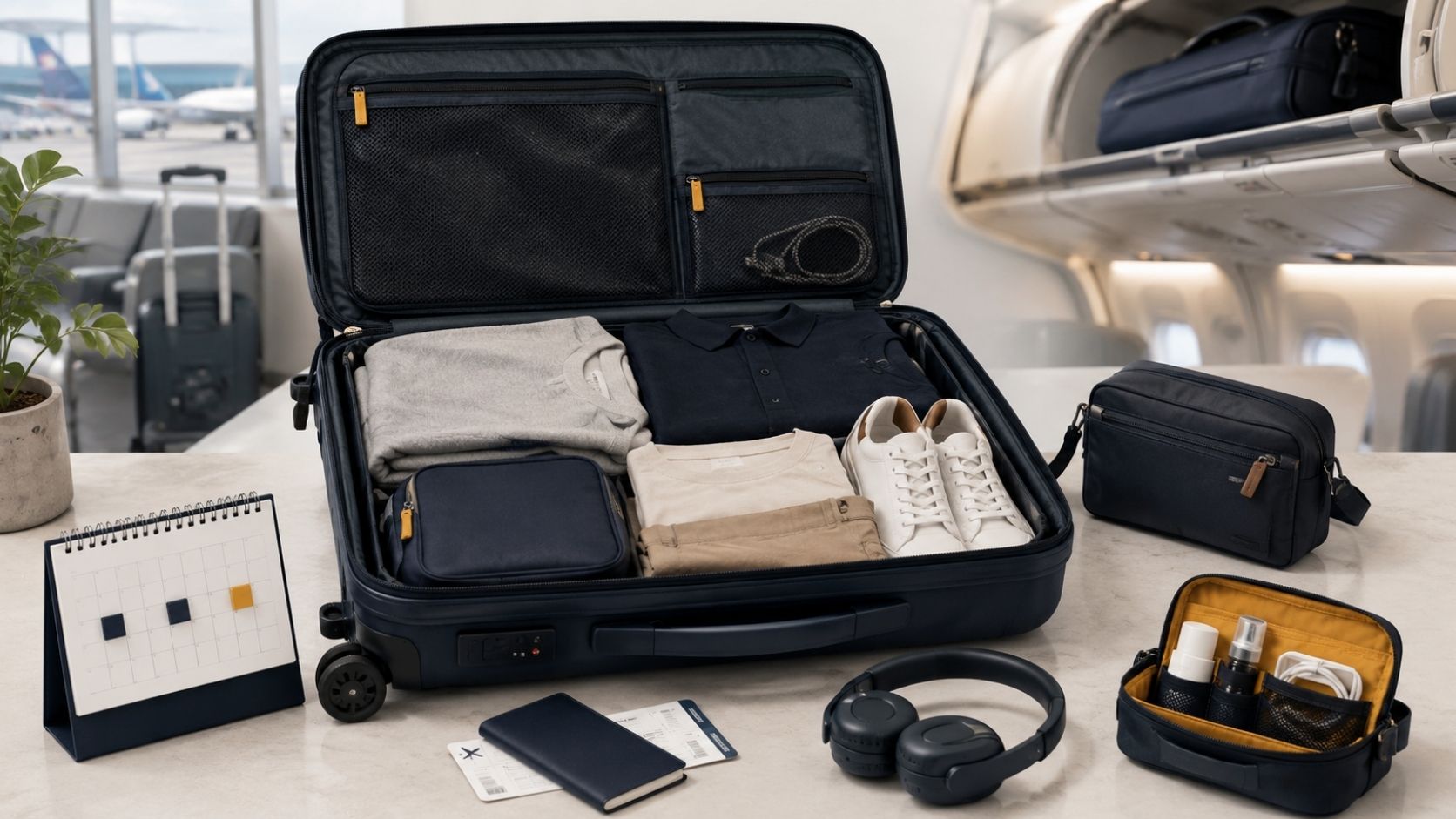
Carry-on luggage is best for short trips when the traveler can pack the trip’s clothing, toiletries, tech, documents, and essentials without forcing the bag, exceeding the airline’s current allowance, or losing access to important items.
This guide explains when carry-on luggage suits a short trip, which bag style fits different travel profiles, how to pack efficiently, when checked luggage may be better, which overpacking mistakes to avoid, and which final checklist to complete before leaving for the airport.
Why is carry-on luggage often useful for short trips?
Carry-on luggage is often useful for short trips because it can keep packing simpler, movement easier, and essentials closer when the bag matches the airline’s current allowance.
Many travelers pack oversized checked bags for short trips because they add just-in-case clothing, extra shoes, full-size toiletries, and backup items that do not match the real itinerary. That extra volume can make a simple trip slower and harder to manage.
Carry-on luggage works best for short trips when the traveler can pack without forcing the bag, keep essentials easy to reach, and avoid unnecessary check-in or baggage-claim steps where the airline and airport process allow it.
The boundary is ticket allowance. Some fares include overhead carry-on luggage, some charge separately, and some allow only a smaller personal item, so the bag is useful only when it matches the rule actually attached to the trip.
How do trip length and travel needs affect whether carry-on luggage is enough?
Trip length and travel needs affect whether carry-on luggage is enough because climate, dress code, activities, laundry access, medical needs, family supplies, and airline allowance change packing volume.
Carry-on luggage works well when the trip is overnight, weekend-length, warm-weather, casual, or built around one main activity. It becomes less reliable when the trip adds formalwear, bulky layers, sports gear, multiple shoes, medical supplies, family items, or no laundry access.
Carry-on packing capacity should be judged by usable interior space, not only the outside dimensions or marketing label. Shoes, toiletries, tech pouches, internal rails, dividers, and wheel wells can all reduce practical space.
Carry-on size limits should be checked against the fully packed bag before relying on cabin travel. Airline rules can vary by fare, route, aircraft, cabin layout, and boarding conditions.
| Trip Factor | Carry-On Luggage Works Best When | Watch Out For |
|---|---|---|
| Trip length | Overnight to short weekend | Longer stays with no laundry |
| Climate | Warm or mild weather | Bulky winter layers |
| Dress code | Casual or simple business | Formalwear and extra shoes |
| Activities | One main activity type | Mixed work/outdoor/event trip |
| Transport | Airports, trains, rideshares | Rough terrain or many stairs |
| Airline fare | Carry-on is included or purchased | Personal-item-only fare |
Which carry-on luggage style fits different short-trip profiles?
Carry-on luggage style fits different short-trip profiles when the bag structure matches business needs, weekend clothing, active movement, budget fares, or mixed activities.
Which carry-on luggage works best for business short trips?
Carry-on luggage works best for business short trips when it has a structured roller, spinner, or compact softside layout with organized compartments.
This style helps separate clothing, laptop gear, chargers, documents, and toiletries. Formalwear may still need more careful folding, a garment-friendly carry-on, or a different luggage plan when creases and extra shoes matter.
Which carry-on luggage works best for weekend leisure trips?
Carry-on luggage works best for weekend leisure trips when a compact roller, duffel, or travel backpack can hold casual clothing, light shoes, and simple toiletries.
The main boundary is souvenir space and outfit bulk. A simple weekend can fit well, but bulky jackets, extra outfits, or shopping plans can quickly reduce usable capacity.
Which carry-on luggage works best for active short trips?
Carry-on luggage works best for active short trips when a travel backpack or soft duffel supports hands-free mobility.
Travel backpack luggage may suit short trips with stairs, buses, trains, cobblestones, or hands-free movement needs. The boundary is bulge control, because soft bags can expand beyond the intended profile when overpacked.
Which carry-on luggage works best for budget-fare trips?
Carry-on luggage works best for budget-fare trips when the bag matches the exact personal-item or carry-on allowance purchased.
Underseat personal-item limits matter when a strict fare includes only a smaller bag instead of overhead carry-on luggage. A bag advertised as carry-on may still be too large for that ticket.
Which carry-on luggage works best for mixed short trips?
Carry-on luggage works best for mixed short trips when the bag has organized main capacity plus a removable personal-item pouch for quick access.
This setup can separate work items, clothing, chargers, medicine, and travel documents. When the trip combines too many activities, checked luggage may become more practical than forcing one cabin bag to do every job.
| Short-Trip Profile | Better Carry-On Luggage Style | Main Advantage |
|---|---|---|
| Business commute | Structured roller or spinner | Clothing and tech organization |
| Weekend city trip | Compact roller or duffel | Simple packing and movement |
| Train or bus trip | Travel backpack | Hands-free mobility |
| Budget fare | Personal-item-sized bag | Matches stricter allowance |
| Formal event | Garment-friendly carry-on | Better clothing protection |
| Multi-activity trip | Organized carry-on + personal item | Better separation |
How should travelers pack carry-on luggage for short trips?
Travelers should pack carry-on luggage for short trips by choosing outfits from the real itinerary, limiting shoes, controlling toiletries, using pouches, and keeping essentials removable.
Pack by outfit purpose, not by fear. A small capsule wardrobe can cover several short-trip situations when colors, layers, and shoes are planned around the real schedule instead of unlikely backup scenarios.
Use packing cubes or pouches to control shape, separate toiletries, group chargers, and prevent loose items from shifting. Wear the bulkiest shoes or jacket during travel when that is comfortable and practical.
Carry-on cabin placement can change when cabin space, aircraft size, fare rules, or boarding conditions change, so keep medication, documents, valuables, and urgent electronics easy to remove if the bag is gate-checked.
| Packing Goal | Better Method | Main Risk to Avoid |
|---|---|---|
| Reduce clothing volume | Capsule wardrobe | Duplicate outfits |
| Control shape | Packing cubes or pouches | Loose shifting items |
| Manage shoes | Wear bulkiest pair | Packing too many pairs |
| Save access | Removable essentials pouch | Essentials trapped in gate-check bag |
| Control toiletries | Travel-size or solid options when suitable | Full-size bottles |
| Leave flexibility | Small spare space | Return-trip overpacking |
When is carry-on luggage not the best choice for a short trip?
Carry-on luggage is not the best choice for a short trip when the traveler needs more space, protection, liquids, equipment, formalwear support, family supplies, or a ticket allowance that carry-on luggage cannot provide.
Formal events can require shoes, garment protection, steam recovery time, and outfit backups that exceed a compact cabin bag. Cold-weather travel can fill capacity quickly with coats, sweaters, boots, and layers.
Sports trips, family travel, and medical-supply planning may also require more room or different handling. Full-size liquids, tools, equipment, or restricted items may not belong in cabin luggage under security rules.
Checked luggage may be more practical when a short trip requires bulky gear, formalwear, extra supplies, or restricted items. Carry-on luggage is best when it fits the trip, not when it forces underpacking or rule-breaking.
| Situation | Why Carry-On Luggage May Not Be Enough | Better Option |
|---|---|---|
| Formal event | Garments and shoes need space | Checked bag or garment bag |
| Winter trip | Bulky layers fill capacity quickly | Larger checked bag |
| Sports trip | Equipment may not be cabin-eligible | Checked sports bag |
| Family travel | More shared items and supplies | Checked luggage |
| Medical needs | Extra supplies may need space | Checked + personal item planning |
| Strict fare | Carry-on not included | Personal item or paid bag |
What overpacking mistakes make carry-on luggage harder to use for short trips?
Overpacking mistakes make carry-on luggage harder to use for short trips when travelers add unlikely outfits, too many shoes, full-size toiletries, loose tech gear, bulky pockets, or no laundry plan.
How do “just-in-case” outfits weaken carry-on luggage efficiency?
“Just-in-case” outfits weaken carry-on luggage efficiency by adding clothing for unlikely scenarios instead of actual plans and weather.
A flexible outfit system leaves more space for essentials because every packed item has a real trip purpose.
How do too many shoes weaken carry-on luggage efficiency?
Too many shoes weaken carry-on luggage efficiency because separate shoes for every activity use rigid space quickly.
Wearing the bulkiest pair and packing only one extra pair if needed keeps the bag lighter and preserves shape control.
How do full-size toiletries weaken carry-on luggage efficiency?
Full-size toiletries weaken carry-on luggage efficiency because large bottles consume space quickly on a short trip.
Travel-size containers, solid toiletries, or destination-provided items can keep toiletry space controlled when appropriate.
How do bulky chargers weaken carry-on luggage efficiency?
Bulky chargers weaken carry-on luggage efficiency when every device gets separate cords, adapters, and loose accessories.
One organized cable pouch makes tech gear easier to find and less space-wasting.
How do overfilled pockets weaken carry-on luggage efficiency?
Overfilled pockets weaken carry-on luggage efficiency by creating exterior bulge that makes the bag harder to measure, store, or keep cabin-ready.
Keeping pockets flat or moving bulky items into a permitted personal item creates a cleaner packed profile.
| Overpacking Mistake | Why It Hurts Carry-On Luggage | Safer Fix |
|---|---|---|
| Too many outfits | Adds unused clothing | Pack by itinerary |
| Too many shoes | Uses rigid space | Wear bulky pair |
| Full-size toiletries | Consumes quick space | Use travel-size options |
| Loose tech gear | Creates clutter | Use one cable pouch |
| Bulky outer pockets | Creates bag bulge | Keep pockets flat |
| No laundry plan | Forces extra clothes | Plan rewear/laundry |
Which final checklist helps carry-on luggage work for short trips?
A final checklist helps carry-on luggage work for short trips by verifying ticket allowance, airline rules, trip needs, bag style, packing discipline, essentials access, weight, dimensions, spare space, and checked-luggage boundaries.
This checklist does not guarantee fee avoidance, cabin placement, or airline acceptance. It helps reduce avoidable packing, sizing, access, and overpacking mistakes before travel.
- Confirm whether your ticket includes carry-on luggage, a personal item, or both.
- Check the airline’s current baggage rules for your route and fare type.
- Match the bag to the trip length, weather, activities, and dress code.
- Choose a bag style that fits the transport environment: airport, train, bus, stairs, or walking.
- Build outfits around actual plans, not unlikely “just-in-case” events.
- Use a small capsule wardrobe where possible.
- Wear the bulkiest shoes or jacket during travel if comfortable and practical.
- Keep packed shoes, toiletries, and chargers controlled in small pouches.
- Keep exterior pockets flat.
- Keep medication, documents, valuables, and permitted electronics easy to remove.
- Weigh the bag if the airline applies a cabin weight limit.
- Measure the fully packed exterior if overhead-bin or sizer fit matters.
- Leave a small amount of spare space for laundry, souvenirs, or return-trip changes.
- Prepare for possible gate-check if the flight is full or the aircraft has smaller bins.
- Choose checked luggage instead if the trip requires bulky gear, formalwear, extra liquids, or equipment.
What should you remember about carry-on luggage for short trips?
Carry-on luggage works best for short trips when the trip is compact, the airline allowance supports the bag, and the traveler can pack efficiently without forcing the suitcase.
The right decision depends on climate, dress code, activities, transport, personal comfort, and ticket rules. Carry-on luggage is often practical for overnight, weekend, business, warm-weather, and light itineraries, while checked luggage remains the better choice when the trip needs more space, special protection, or items that cabin luggage cannot reasonably handle.
Frequently Asked Questions About Carry-On Luggage for Short Trips
When is carry-on luggage best for short trips?
Carry-on luggage is best for short trips when the traveler can pack the needed clothes, toiletries, tech, documents, and essentials inside the airline’s current allowance without forcing the bag or losing access to important items.
Is carry-on luggage enough for a weekend trip?
Carry-on luggage is often enough for a weekend trip when the weather is mild, the dress code is simple, and the traveler avoids “just-in-case” packing. Bulky layers, formalwear, or extra shoes may require more space.
What carry-on luggage style is best for short trips?
The best carry-on luggage style depends on the trip. Structured rollers suit business travel, compact rollers or duffels suit weekend trips, travel backpacks help with active routes, and personal-item-sized bags may suit strict budget fares.
When should I use checked luggage instead of carry-on luggage for a short trip?
Checked luggage may be better when the trip requires formalwear, winter layers, sports gear, family supplies, medical supplies, full-size liquids, tools, or a fare that does not include overhead carry-on luggage.
How do I avoid overpacking carry-on luggage for short trips?
Avoid overpacking by building outfits around the real itinerary, limiting shoes, using travel-size or solid toiletries when suitable, organizing tech in one pouch, keeping pockets flat, and leaving small spare space for the return trip.